The Essential Role of Death Doulas in End-of-Life Care
A Death Doula, often referred to as an end-of-life doula or death midwife, is a non-medical companion who offers emotional, spiritual, and practical support to individuals confronting the end of life, alongside their loved ones. Their objective is to assist these individuals in navigating the dying process with dignity and tranquility.

What Does A Death Doula Do?
A Death Doula is a compassionate companion who provides invaluable support during the final stages of life, gently guiding individuals and their families through this significant transition. It is essential to connect with a Death Doula as soon as a terminal diagnosis is received, for the journey of grief often begins the moment such heartbreaking news is shared. The resources a Death Doula offers can foster a supportive community, bringing together a diverse network of care, including CLSC workers, in-home care specialists, podiatrists, spiritual guides, massage therapists, and others ensuring that no one has to navigate this difficult time alone.
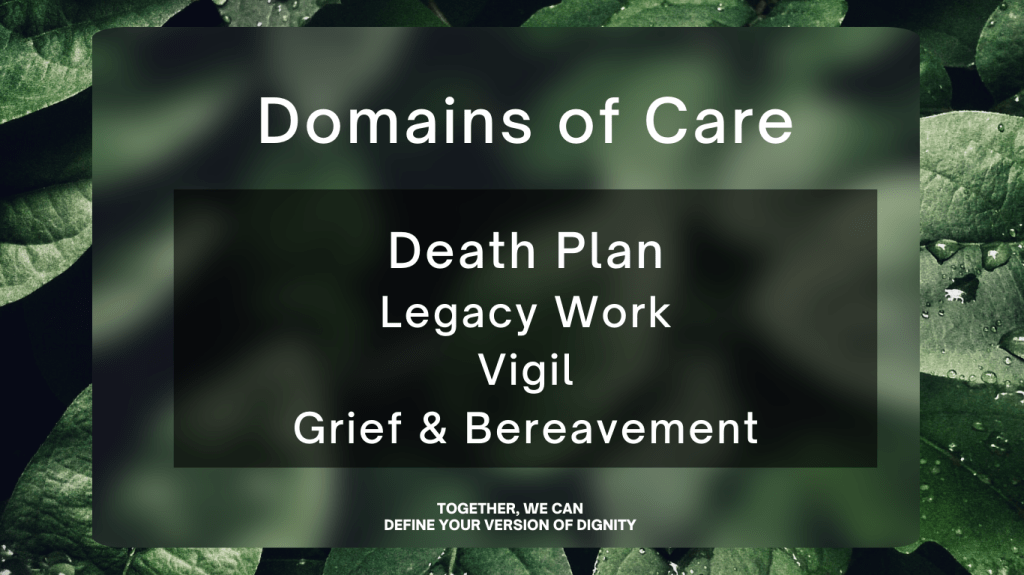
Along with a team of invaluable people, a Death Doula has different domains of Care. In these domains of Care we have a Death plan, Legacy work, Vigil and Grief & Bereavement. All of these categories can be combined and mismatched to create a dignified peaceful death as close to their choosing as feasible. Everyone’s perfect death is different. It is important to find what would make the dying happy in their last moments.
`
Death Plan
Creating a death plan while you are still young and in a clear state of mind is profoundly important. Ensuring your wishes are honored when the time comes is a must. Each person has their own unique desires regarding end-of-life preferences, and it’s perfectly okay to recognize and embrace that. Sitting down with a Death Doula can be a comforting experience. They are well-versed in the complexities of the laws surrounding death and can offer a wealth of resources. They can offer this while being a compassionate sounding board for your thoughts.
Bringing an impartial third party into conversations about these sensitive topics with your loved ones can help ease any tensions. They foster an environment where you can share your wishes openly and honestly. Taking the step to formulate a death plan can significantly reduce fears and anxieties about dying. Empowering you to articulate your desires with the confidence that your loved ones will strive to honor them. It’s essential to remember that while we are committed to supporting the wishes of those nearing the end of life. There maybe circumstances beyond anyone’s control. Nevertheless, we promise to do our utmost to adapt and honor as many of your wishes as possible.

Legacy Work
Legacy work is a vital part of our journey towards the end of life. It offers a beautiful opportunity to reflect on the moments that have filled our years. Between cherished vacations, memorable birthdays, and the delightful stories that have shaped our lives. As more resources become available to guide us in this meaningful endeavor, more people are embracing the importance of creating a legacy. By leaving behind something tangible, we gift our loved ones pieces of our lives that hold deep significance. Working together on these projects not only fosters lasting memories for the family but also supports the grieving process. It equips us with strategies for navigating end-of-life care with love and compassion.

Vigil
Vigil offers a compassionate presence for the individual who is now “actively” dying, with a Death Doula by their side. When a person has prepared a Death Plan in advance, it is easier to facilitate the carefully crafted wishes into focus. Guiding us to honor their desires as best we can. If the dying person hasn’t had the opportunity to connect with a Death Doula beforehand or hasn’t expressed their final wishes intake session is a heavily suggested. It is essential before they become unresponsive, ensuring their voice is heard.
Sitting vigil is about being there—truly present—both for the person who is passing and for their family. This shared space offers comfort to the family, providing them with someone to talk to during this incredibly challenging time. It serves as a guiding hand during tense moments. Helping to bridge the connection between family members and their loved one. Often, people need encouragement to engage fully—to touch, to speak, or even to know it’s okay to step away when they need to begin their grieving journey. Some feel compelled to stay even when they are uncomfortable. It is essential to remind them that it’s perfectly natural to seek solace outside the room and allow them to process their feelings.

Grief & Bereavement
Grief and bereavement unfold differently for every person, shaping an experience that is deeply personal and often overwhelming. During this tender time, a Death Doula offers steady, compassionate support to help families navigate the emotional and practical realities of the “after.”
This support may include connecting families with qualified grief counselors, assisting with everyday tasks such as grocery shopping or preparing meals, and gently helping to reorganize the home so it can once again feel like a comforting and nurturing space. A Death Doula can also guide families through funeral planning, the return of medical equipment, or coordinating with organizations that specialize in sorting and clearing belongings—always with sensitivity and respect.
Above all, the role of a Death Doula is to meet you exactly where you are, supporting you in ways that feel meaningful, safe, and aligned with your needs. And if something falls outside the doula’s scope, they will compassionately guide you toward the resources and professionals best suited to help.
You do not have to walk through grief alone. A Death Doula is there to hold space, offer guidance, and remind you that support is available—every step of the way.

Choosing What Is Right For You
When selecting someone to support you on this final journey, it’s essential to feel both safe and understood. If you sense that the person you’re speaking with might not be the right fit for you, don’t hesitate to communicate with your caregivers and explore other options. Remember, not everyone will resonate with you right away; it’s perfectly okay. Prioritize finding someone who can genuinely offer you the time and attention you deserve. This is your journey, your wishes you wish to express, and you hold the reins. Lean on the people around you and utilize their resources. It’s important that you don’t feel shy, overwhelmed, or overlooked during this crucial time.
 Kylla Bowbrick Life Services
You must be logged in to post a comment.